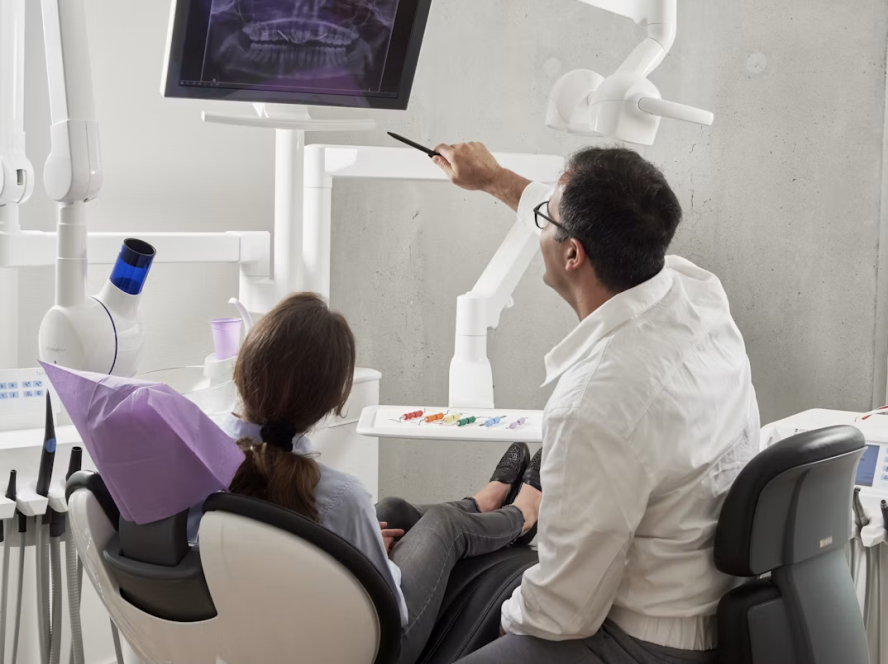
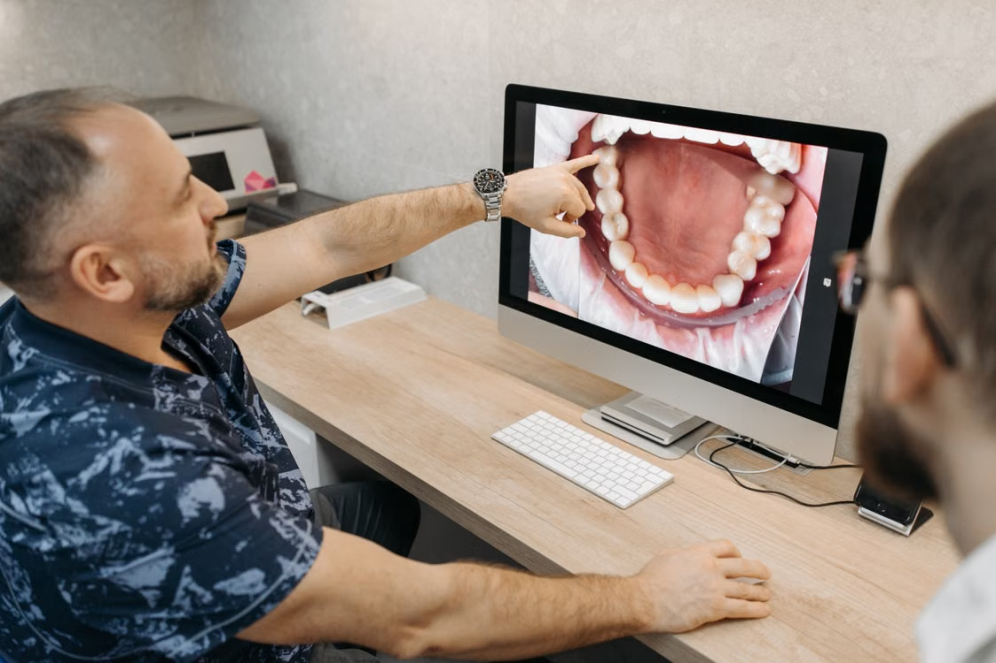
Has a dentist ever told you about a problem with a back tooth that you had no way of seeing? Most people simply take the description on trust. Intraoral cameras change that by putting a clear, enlarged image of the tooth on a screen in front of you, so the explanation and the evidence arrive together.
What Does an Intraoral Camera Actually Show?
The camera is a small handheld device, one of several digital tools used during dental exams that the dentist moves gently around the mouth. It captures close-up images of areas that are hard to see with a mirror, such as the roof of the mouth and the very back of the mouth, and sends them to a monitor. A tooth that looks fine from the outside may show discoloration, a chip, or the worn edge of an older filling once it is magnified.
That matters because early problems are often silent. The National Institute of Dental and Craniofacial Research notes that early tooth decay usually causes no symptoms and may first appear as a white spot, a stage at which it can still be stopped or reversed. Spotting details like these early is the idea behind preventive dentistry.
Why Seeing the Image Changes the Conversation
A verbal description of inflamed gums can feel abstract; an image makes it concrete and prompts better questions. In a pilot study of chairside intraoral cameras, the majority of the patients surveyed agreed the camera helped them better understand the oral cancer screening they received. The images can also be saved, which makes it easier to compare an area at a later visit and see whether anything has changed.
Questions to Ask When You Are Shown an Image
These questions help turn a picture into a plan:
- What exactly am I looking at, and is it normal or a concern?
- Does this need dental treatment now, or can we monitor it?
- If it involves my gums, would gum treatments help, and what do they involve?
- Can we compare this image at my next visit?
Jot down the answers so you can weigh your options at home.
Look Closer at Your Next Checkup
Seeing your own teeth through intraoral cameras makes every recommendation easier to weigh. Our team at Advanced Dental Center believes every patient deserves to be treated with respect, and clear information is part of that. If you want dental care in Germantown with explanations, contact our team to book your next exam and ask to view the images.