
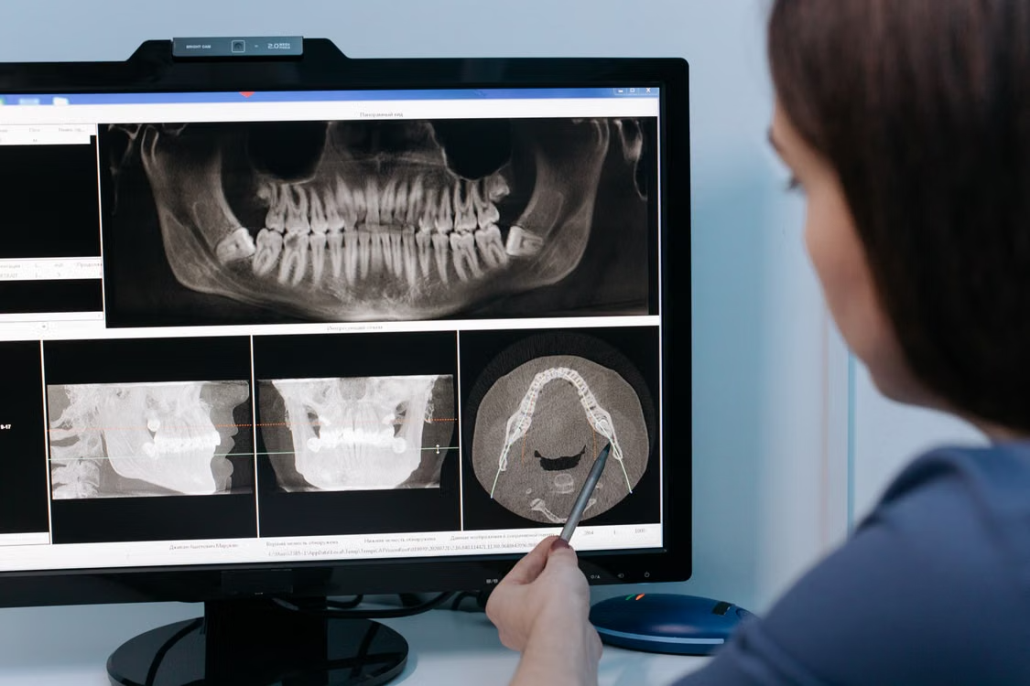
A standard dental X-ray is a flat picture. Teeth, roots, and bone overlap in a single layer, which works well for routine dental care but leaves some questions unanswered. A cone beam CT scan adds the missing dimension, letting the dentist view the same area from different angles before a complex procedure begins.
What Does a Cone Beam CT Scan Capture?
During the scan, the machine rotates around the patient’s head and collects data with a cone-shaped X-ray beam. Software then turns that data into a three-dimensional image of the teeth, the jaw, and nearby structures. Because the result can be viewed in layers and from multiple directions, it shows details a single flat image can hide, such as the position of a root or the shape of the bone around it.
Where a 3D View Makes the Biggest Difference
This type of imaging is saved for cases where a flat X-ray may not give enough information. Common examples include:
- Planning dental implants and checking the jawbone
- Diagnosing problems that may needroot canals
- Assessing teeth and jaws after a dental injury
- Locating impacted teeth before orthodontic treatment
The U.S. Food and Drug Administration lists implant planning, root canal diagnosis, and dental trauma among its uses. If your dentist recommends a scan, ask which of these questions it is meant to answer.
Why It Is Not Part of Every Checkup
A 3D scan usually involves more radiation than a standard dental X-ray, though less than most other CT exams, so it is used only when other imaging falls short. A review in Dentistry Journal notes it is not recommended for every orthodontic patient, especially since children are more sensitive to radiation. Asking why a scan is needed is always reasonable.

Planning a Complex Treatment? Start With a Clear Picture
When a case calls for a closer look, including planning for implants and orthodontic care, our team at Advanced Dental Center uses cone beam CT scans to see the full picture. You are always welcome to ask why a scan is recommended and what it is expected to show. If you are exploring dental implants in Germantown, contact our team about implant planning or read what to know before getting dental implants.